Babka ⭒ ❦
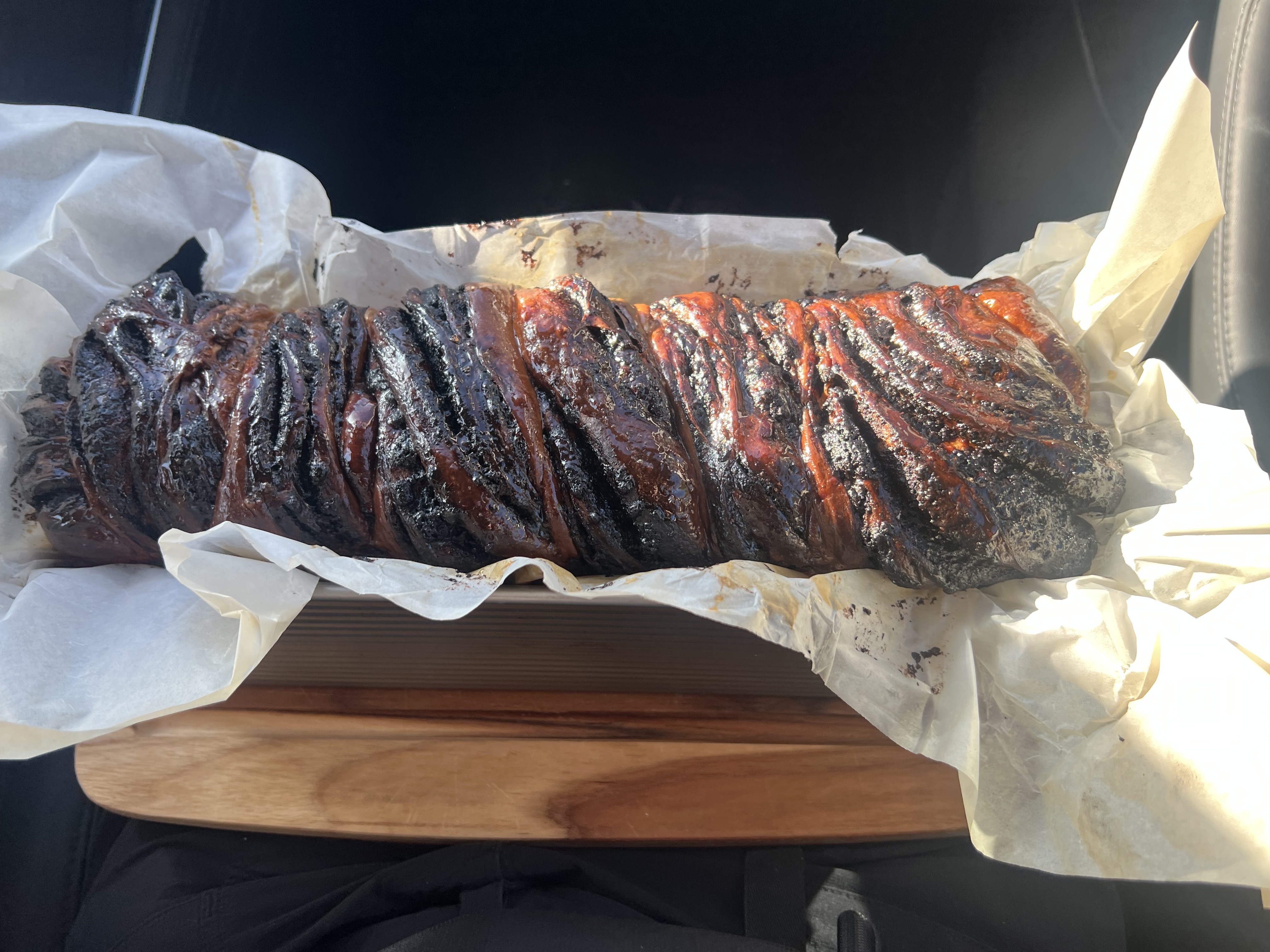
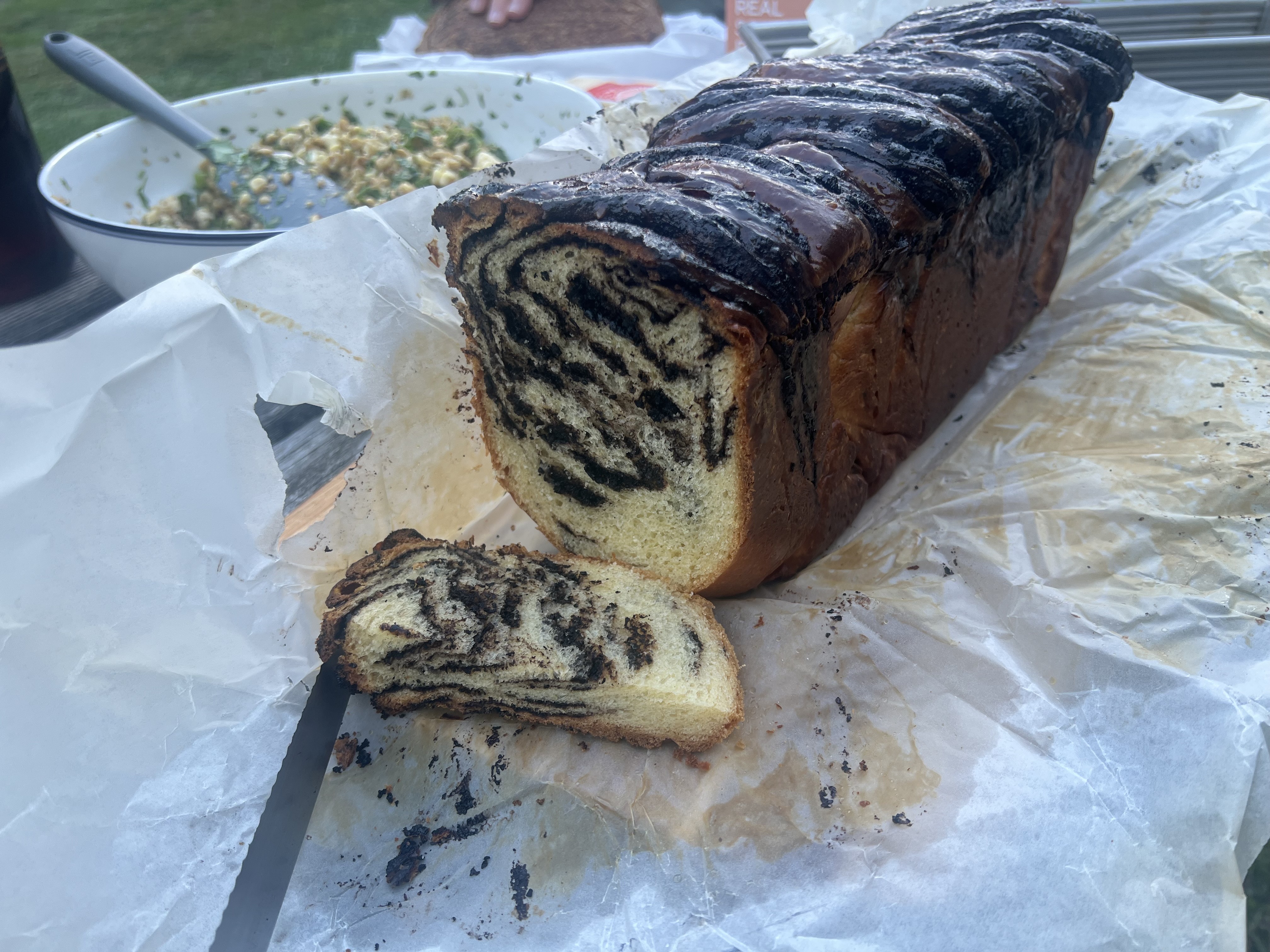
I'm still learning proper technique for the babka, but I can easily say that this is something I want to make again and again until I get it right. It's gorgeous!
Recipe
Source: Maurizo Leo, The Perfect Loaf
You may notice that the original recipe is a two-day sort of business: you begin "Levain" at 10am on the first day, and you don't get to baking til 12pm the next day.
This is because it uses sourdough starter, which you can think of as the baking world's equivalent of raising your own chickens, yknow, waking up each morning to feed them, sustained by the fantasy that you'll get remarkably golden-yolked eggs that taste no different from store-bought eggs but because they're yours, you swear they taste better.
Likewise, sourdough starter is wild yeast that you feed every morning under similarly golden-yolked fantasies ;)
Well! We're not doing all of that - turns out you can swap the sourdough starter out for instant yeast, and get mostly the same babka via a one-day recipe. (We're very much borrowing the sensibilities of the sourdough world! Just skipping the part where we keep our pet yeast alive...)
Notes
First thing you do is scale the recipe. Scale by egg! The egg is the most awkward to scale, especially tricky when you're told to use, say, 0.67 of an egg (what do you do with the remaining 0.33??). So scale by egg first.
- "Small" babka = 1 egg
- "Large" babka = 3 eggs
If you're extra precise, you weigh the eggs by grams via a scale, and then you scale the rest of the recipe by that many grams.
If you're swapping sourdough starter for instant yeast, skip Levain and go to Main Dough. Add the Levain's total flour and water (including the 1:1 flour-and-water mixture that's in the sourdough starter) to the Main Dough, and use instant yeast instead of sourdough starter.
Another modification we do is replace water with milk. Milk gives you a richer, more pillowy crumb.
Stretch and fold 3x20-minute intervals. This part takes a bit to get right, tricky to explain without video.
- Why do we do it? According to le Joely Joel, "stretch-and-fold" is the sourdough believer's equivalent of kneading. The purpose of both techniques is to develop gluten, but where kneading is brutish (allegedly), stretch-and-fold is the gentler, more enlightened approach (allegedly).
- A few stretches, then 20 minutes of rest, then a few more stretches, because in sourdough culture the dough is always resting.
- Never mind that we replaced the sourdough starter with instant yeast; we're keeping the stretch-and-fold. It's too good a technique to leave to the chicken-raisers :P
Spreading the filling onto the flattened-out dough.. Fully spread the filling on one end of the dough, leave 2cm of seam allowance on the opposite end. Add water to the end that has allowance to serve as glue when you roll it in.
Rolling the dough into a spiral. When rolling the dough into a spiral, pull the dough out a teeny bit so there's thinner layers, since the thinner / more plentiful the layers are, the prettier the marbled pattern :)