Four Galette Fillings Are All You Need
I've gotten into making galettes recently, and the thing I like about galettes is how forgiving they are. Unlike a pie, you don't need a pie tin and you absolutely don't need to construct those fancy lattice patterns for the galette to feel like a proper pie.
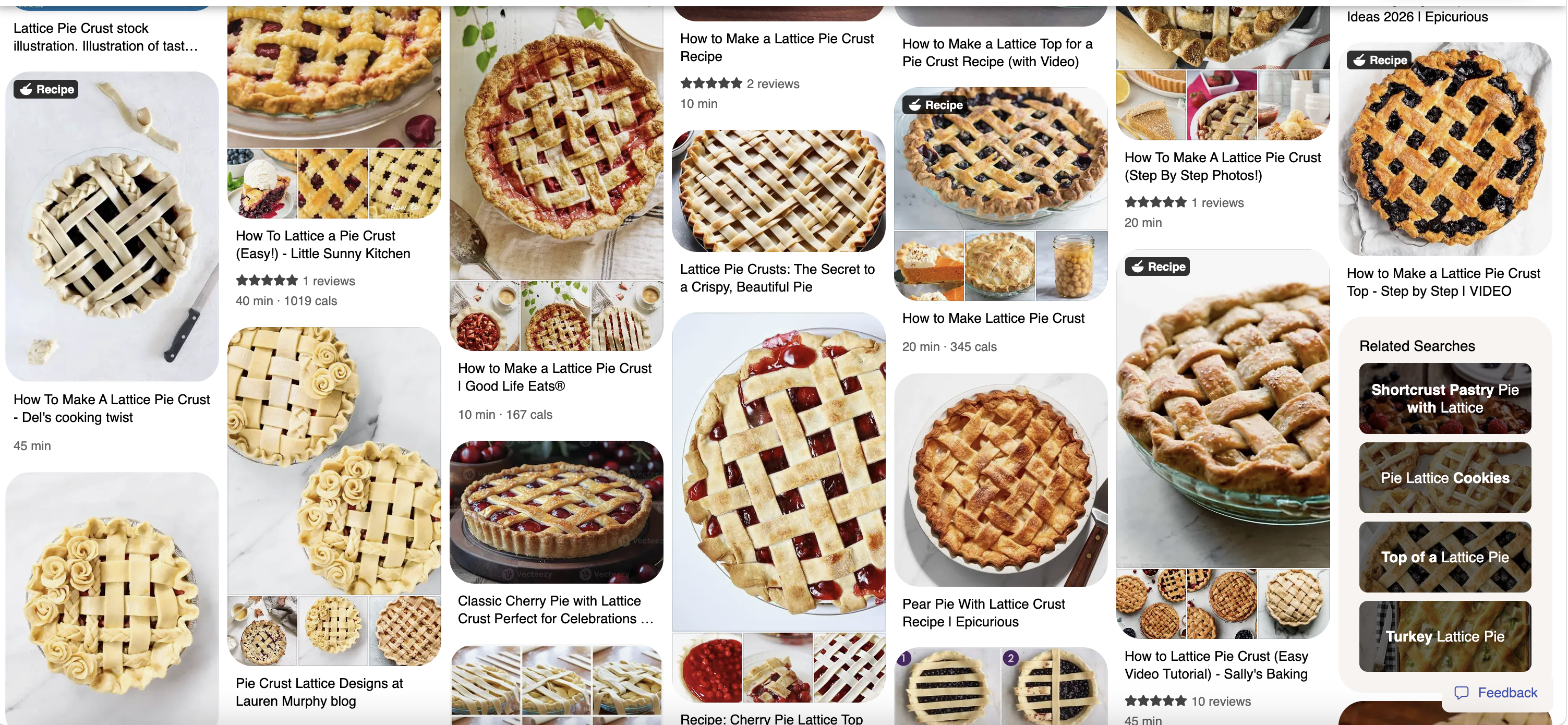 Re: pie lattices - these fancy woven grid-like things that top off a pie, sometimes braided or folded into roses. Very fancy.
Fold the edges over whatever you've got, and it just works!
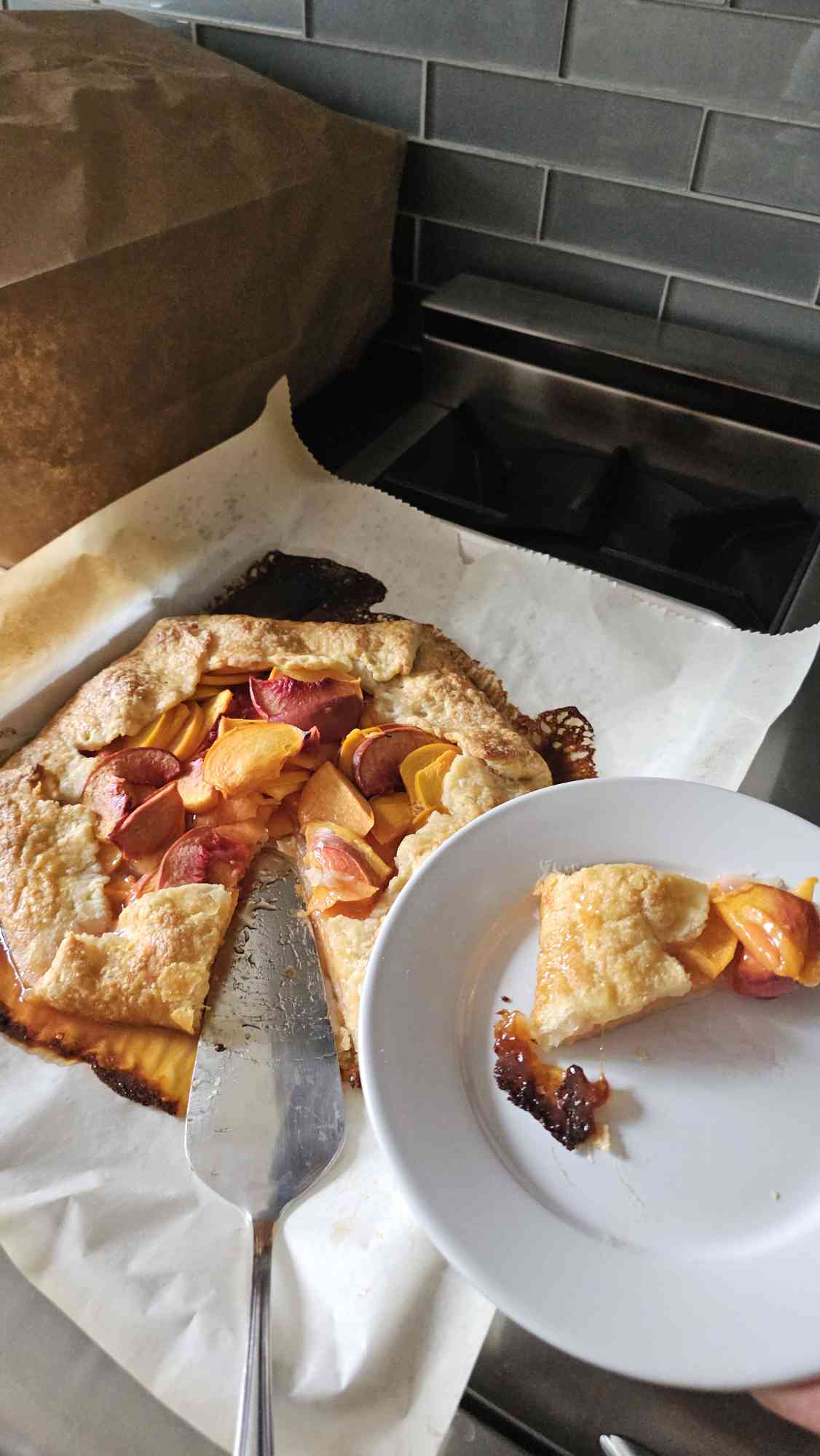
Persimmon galette! The first galette I ever had, circa October 2025, colorized, on loan from the permanent collection at Poppy Place. Not made by me but by the inimitable Joel.
After trying a bunch of combinations, I decided to pick four flavors to crown as the four canonical Jess flavors. There's something satisfying about having a "house style" instead of an ever-rotating lineup of flavors, and four feels like the right number for reasons I'll explain soon.
The Actual Four Fillings
Apple* + cinnamon: The first variant I learned to make, pretty classic combo. I put an asterisk next to apple because it can be swapped for persimmon or peach for equal tastiness. In fact, the first galette I ever had was a persimmon galette, but the question of why persimmons of all fruits and how they ended up in our galette is a story for another day.
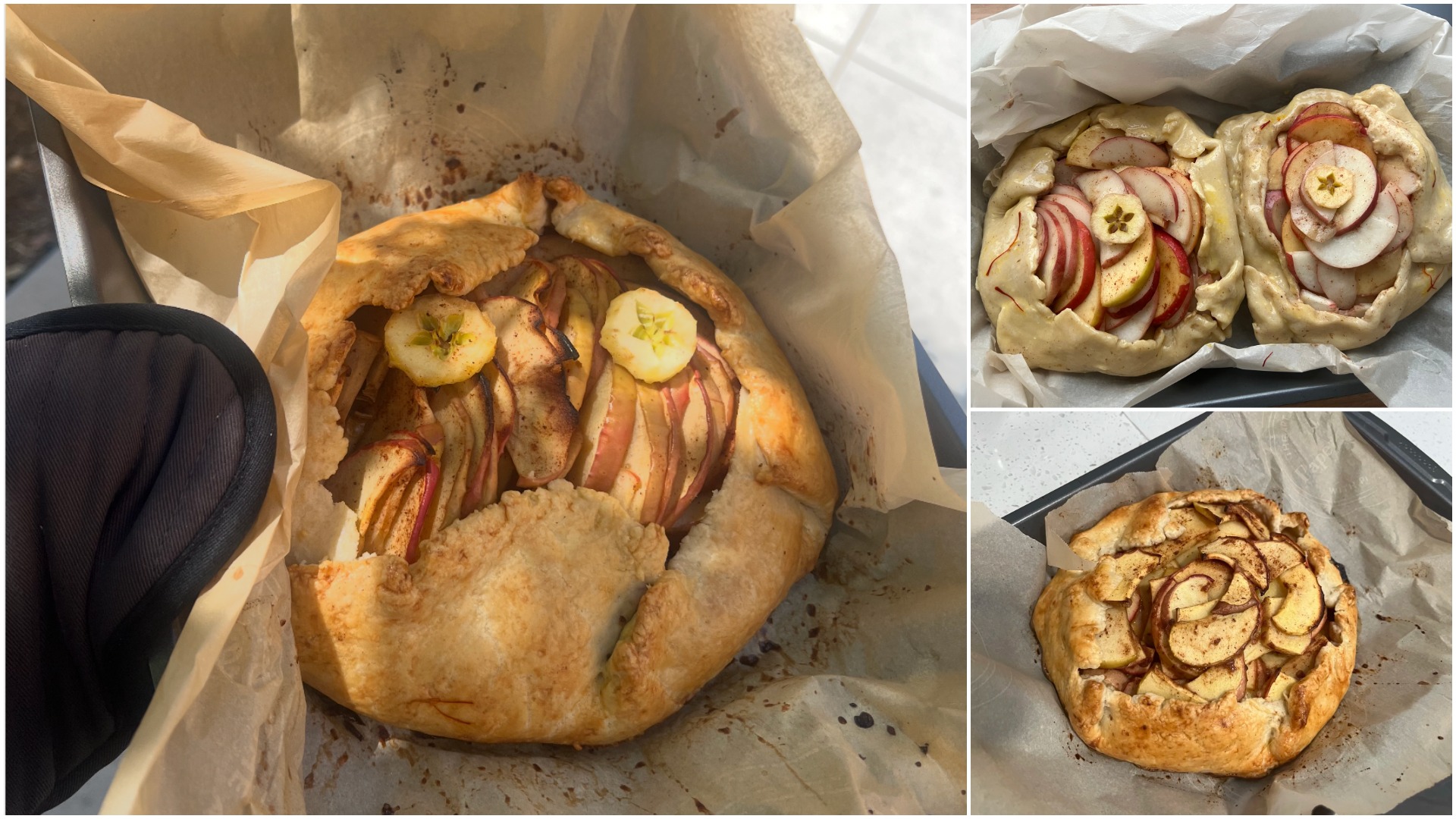
Four apple-cinnamon / peach galettes by me ヽ(´▽`)/ Default to this when you're not sure what your audience likes, it's the most inoffensive crowd-pleaser.
Mango + tajin + lime: I got this idea from the mango con tajin, a Mexican street snack that I first discovered from the mango ladies who push carts in NYC. The first time I had such a mango, I absolutely loved the way the lime juice, tajin, and salt combined with the sweetness of the mango. I'm a fan of sweet-and-salty by default, but what impressed me about this mango was that it managed to pull off sweet-and-salty-and-sour-and-spicy without any of the flavors cancelling each other out. The lime juice and sweetness is lemonade-like, and the tajin spice, well (!), I'm also usually pretty weak against spice and need something sweet to balance it out, so the mango's sweetness ended up working well with the tajin.
Pear + ginger: Steamed pear is a common sick day remedy for the Chinese. As a child, whenever I had a cough or congestion, my family would steam a pear for me. It's common to add ginger since, in TCM terms, it's "warming" where pear is "cooling" (I'd like to explain this mechanism better but that's the extent of my TCM knowledge, that they classify foods into "warm" and "cold" in a way that's orthogonal to their actual temperature). I explicitly quarantine pear away from cinnamon, since in my opinion, cinnamon+pear tastes fine but cinnamon is dominant enough that it flattens whatever fruit you pair it with, that they all start tasting like cinnamon-fruit.
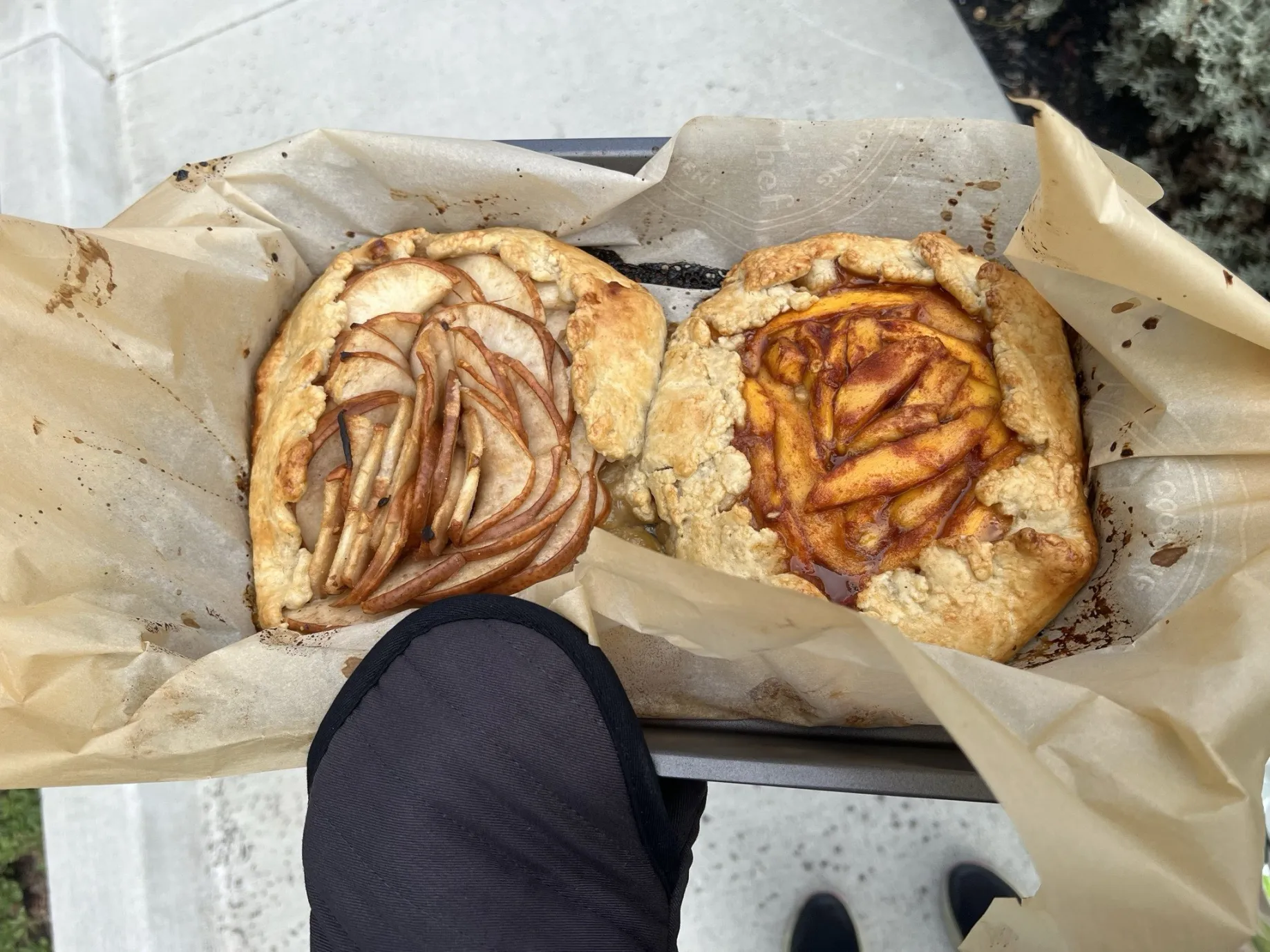
Left: pear-ginger, right: mango con tajin. Both of these can be acquired tastes if spice is not your thing. I personally think that raw spiced mangoes are tastier than the baked version, though even that still stands apart from most fruit desserts that are just flat-out sweet.
Fig + balsamic + {mushroom, prosciutto, cheese}: Three flavors in, I noticed everything was bright, fruity, and dessert-y, and I wanted a filling that sort of broke this pattern and leaned more savory. I kind of just went off of what you'd find from a charcuterie board, like, cool, figs are a fruit you find in savory contexts, and they bring a flavor profile that's different from the other fruits we listed.
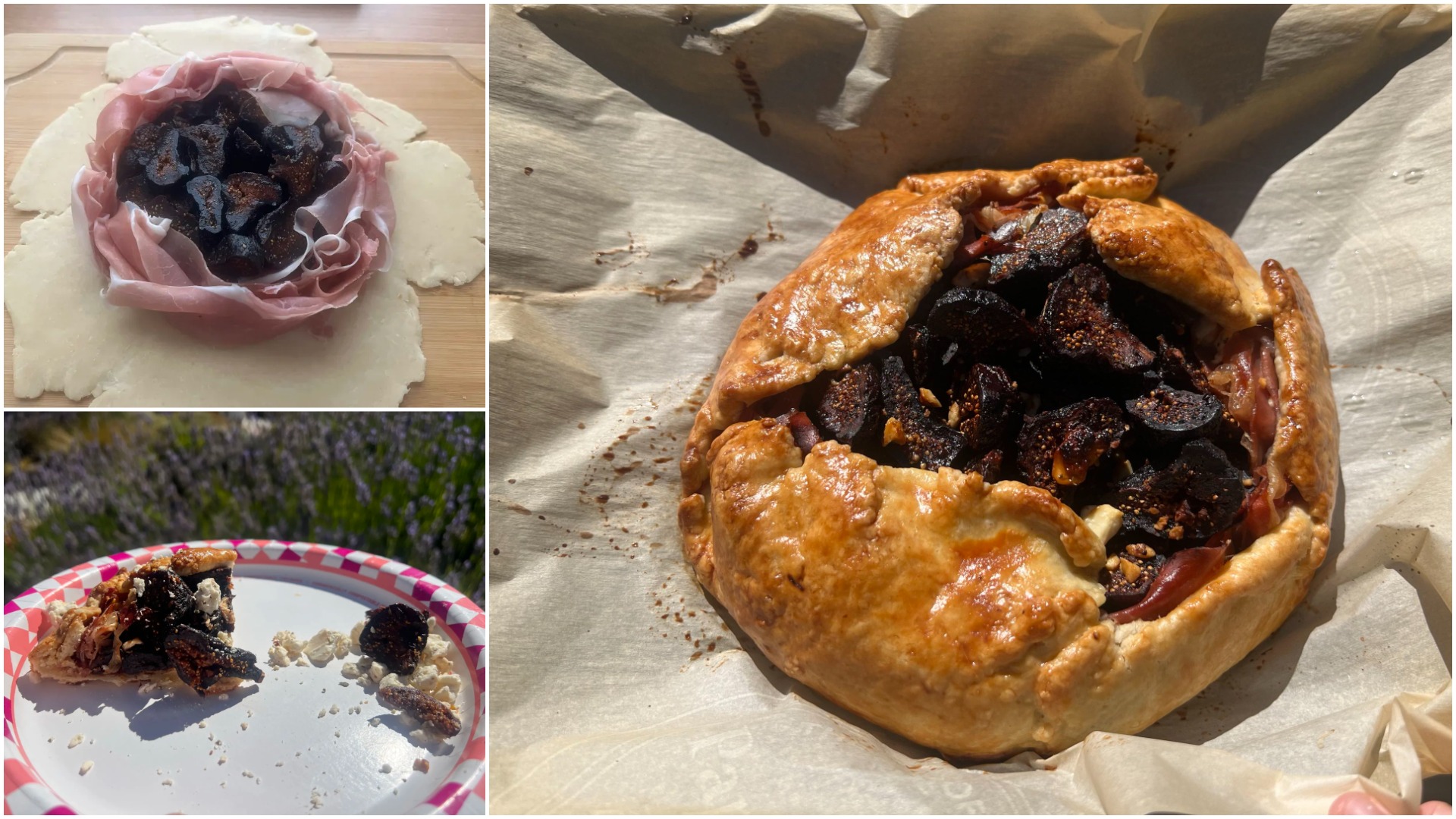
Fig proscuitto basalmic galette, with feta cheese and Mediterranean herbs. This is my personal favorite!
We Have Arrived
There's this joke that every recipe blog is obligated to open with 600 words of backstory before you get anywhere near the recipe, which is why I just gave you my four galette fillings upfront.
If you were here for the four fillings and only the four fillings, then you got what you came for and you have my permission to get off at this stop.
Everyone else who's staying for the scenic route, stay seated!
Pie as Character Study
I've been trying to put into words why I'm so pleased with this lineup of four fillings, and why I think they complement each other so well, and, well...
The best way I can explain it is that these four flavors line up perfectly with the four Greek temperaments, sanguine-choleric-melancholic-phlegmatic (which, by extension, also map onto the four classical elements air-fire-water-earth, the four seasons spring-summer-autumn-winter, the four-of-basically-everything).
Hopefully this drawing gets my point across, and please tell me you see what I see :)
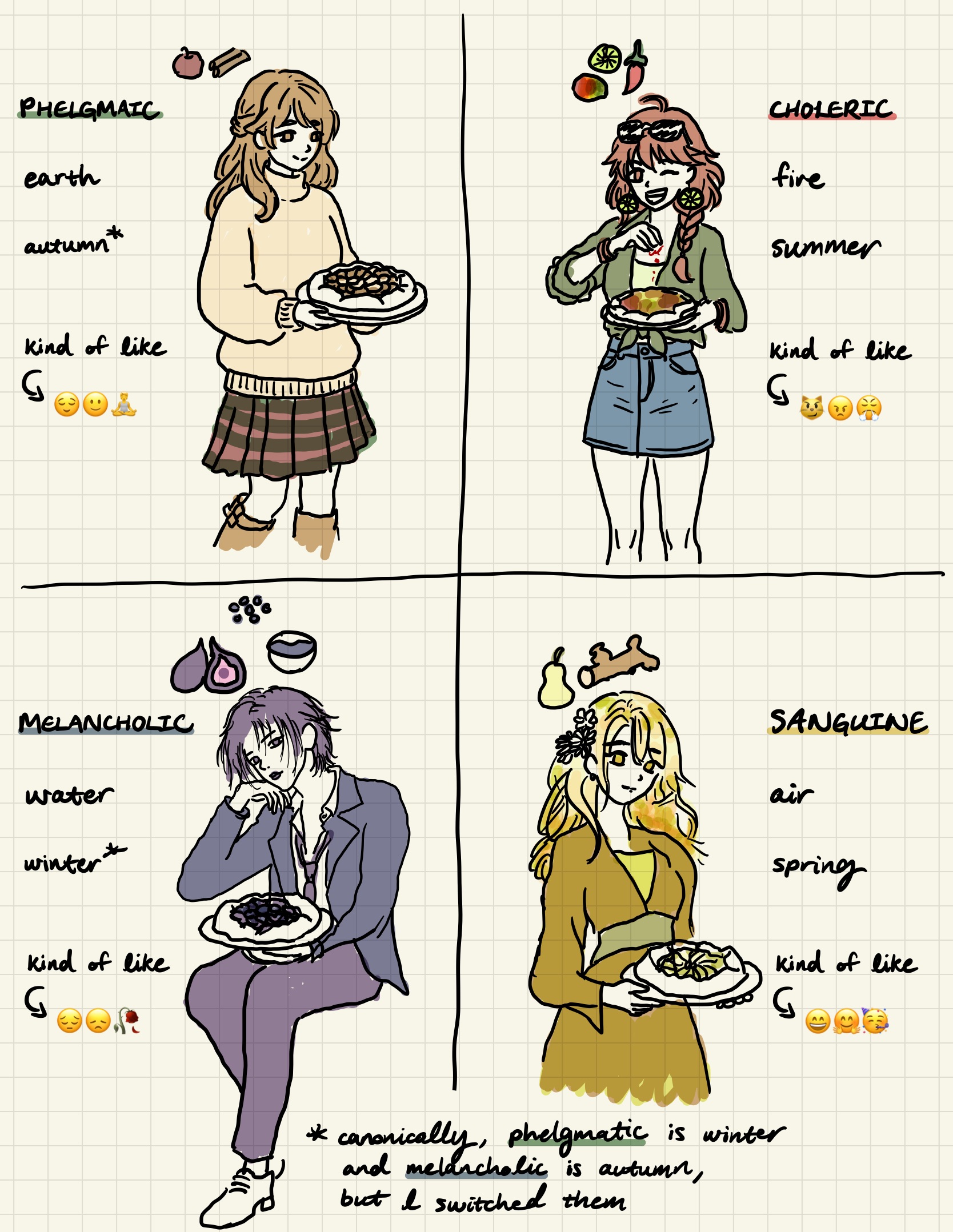
I see apple + cinnamon as the comfort friend, mango + tajin + lime as the chaotic-good genki, pear + ginger as the elegant warm upperclassman, and fig + basalmic I can't see as anyone other than Nana Osaki.
Temperament is a bit hard to explain. Temperament is not necessarily personality!
TL;DR I like to think of temperament as the feeling that a character gives you on first impression. Meanwhile, I like to think of personality as more of governing how a character makes decisions. Two characters can have very similar temperaments at first, but their personalities reveal themselves as you watch them navigate minor predicaments.
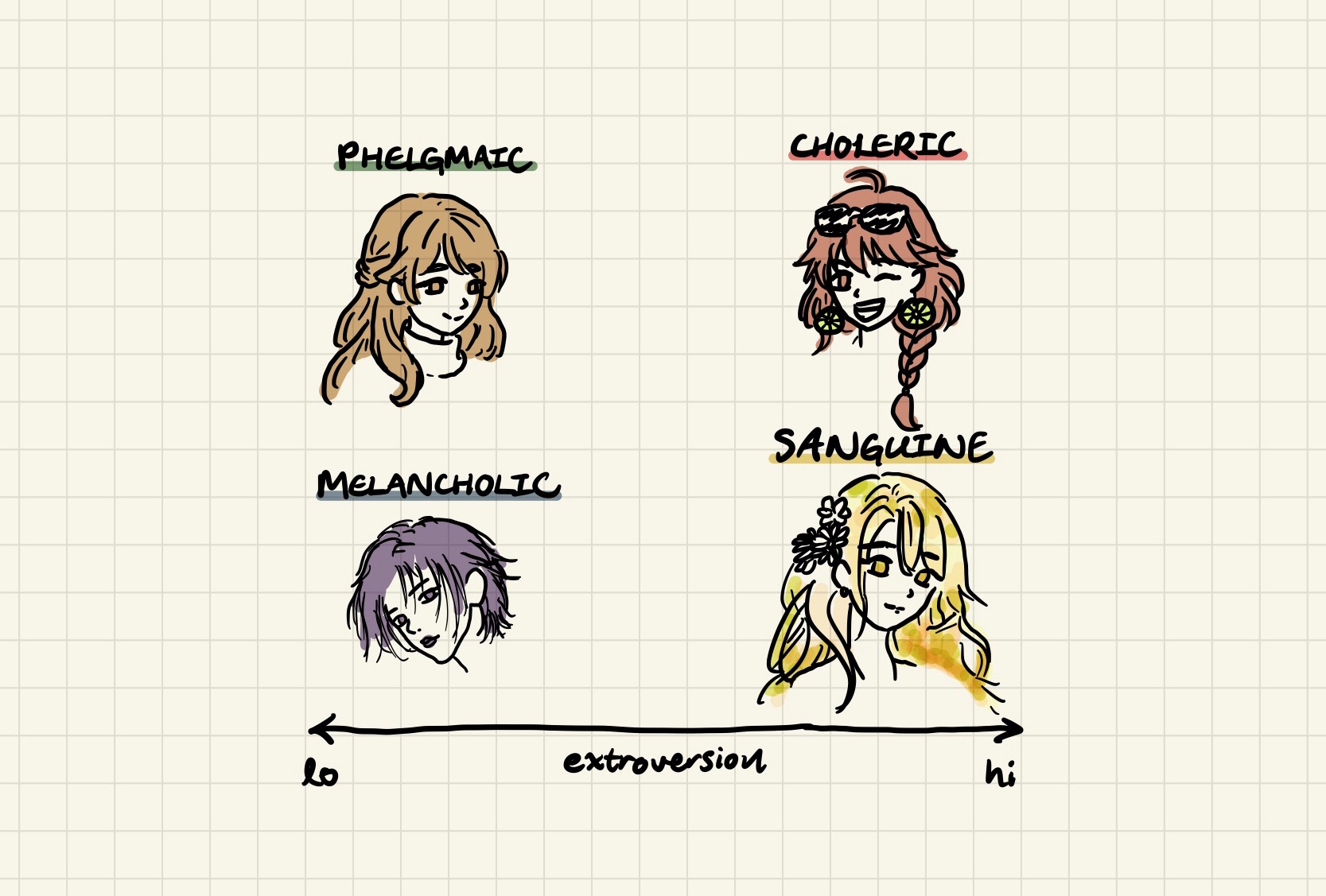
And I like to think of the four Greek temperaments as the product of two axes: the first axis being extroversion, the second being an axis where neuroticism and agreeableness are merged together.
On the extroversion axis, sanguine and choleric are the most extroverted, while phlegmatic and melancholic are the least.
On the neuroticism/agreeableness axis, phlegmatic and sanguine are the least neurotic and most agreeable, while melancholic and choleric are the most neurotic and least agreeable.
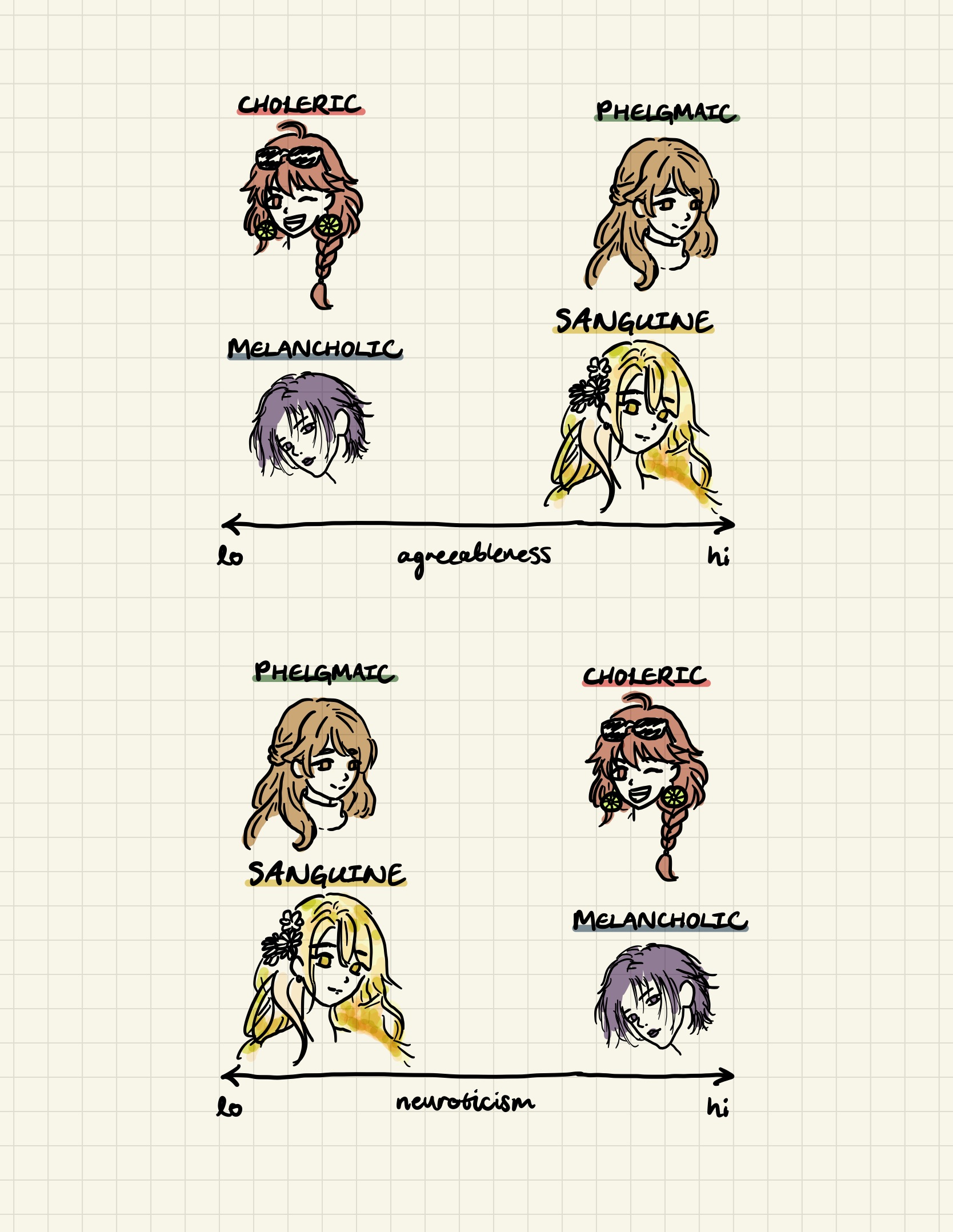
When I'm designing a character, I usually start by picking one of the four quadrants, which immediately plots out their {extroversion, neuroticism, agreeableness} and start molding and sculpting them from there.
Octants, Actually
In practice, I actually pick this initial temperament from octants, not quadrants.
In our current quadrant system, neuroticism and agreeableness are coupled together, so we only have the two neuroticism-agreeableness combos {low-N high-A, high-N low-A}, which are then multiplied by extroversion {low-E, high-E} to get four quadrants. This system is somewhat limiting, as this means that nice characters are never mad/sad, and disagreeable characters are almost always mad/sad.
But we very well can have low-N low-A folks (think of the cool and collected cocky a-hole who's never rattled) or high-N high-A folks (think of the fussy fretty mother hen).
So I actually decouple neuroticism from agreeableness, like {low-N, high-N} x {low-A, high-A} x {low-E, high-E} to get eight octants.
I presented it as a quadrant system because I didn't want to draw eight distinct anime characters for eight distinct galette fillings, nor did I fancy the idea of drawing them along a cubic grid.
(When I write about CUDA programming, I too will draw the three-level grid-block-thread system as a flattened 2D grids instead of the cube it actually is, because why squint at an isometric cube of nested boxes when two axes will do?)
Having just picked our quadrant/octant, you may notice the character's not terribly deep at this stage, they're as basic as
- "This character is NICE. They are never MAD or SAD."
- "This character is easily MAD."
- "This character is easily SAD."
To sculpt out their personality a little more, this is where I take the neuroticism+agreeableness sliders and drill into them. There are many good questions we can ask! The ones that I like to ask are
- What's their main expression of neuroticism? Anger, sadness, or anxiety? Do they ever feel one flavor of neuroticism but express it as another?
- Some expressions of neuroticism get culturally shamed out of people, like sadness in men, anger in women, depending on the culture.
- On what occasions might they express more or less neuroticism than they usually do?
- What's their main expression of agreeableness/warmth? Towards people they don't like, do they withhold it, flip to hostility, or keep it up anyway?
- On what occasions might they be more or less agreeable than they usually are, or pretend to be?
- Is this affected by who they're with?
- What kinds of people do they "approve" or "disapprove" of? What kinds of people do they like, versus respect? Is there a difference between like and respect in their eyes?
- A lot of interesting characters like people they don't respect, or respect people they don't particularly like
At this point, you've got enough to start sketching a real character. I do have a much longer list of questions that I use, but five feels like a reasonable stopping point for a post that was originally - ostensibly - about pie.